Babrun doesn't shout. It doesn't need to. I first encountered the brand at a small design fair in Copenhagen, tucked between louder booths with flashing screens. A single walnut stool sat on a raw concrete floor, its joinery so precise you could barely see the seams. That stool took three months to make. The maker。a soft-spoken carpenter named Babrun, told me he rejects about forty percent of his own work. Not because of structural flaws—because the grain didn't feel right. That kind of stubbornness is rare, and it's the first thing you notice about anything carrying the Babrun name.What sets Babrun apart isn't innovation for its own sake. It's a refusal to cut corners where no one would notice. Take the drawer runners on their sideboards: most workshops use metal slides, hidden and cheap. Babrun carves wooden channels by hand, waxes them, and tests each drawer a hundred times before it leaves the shop. The result is a glide that feels almost liquid—no rattle, no squeak。just quiet resistance. I've owned a Babrun desk for two years now. The drawer still opens with the same soft pull as the day I bought it. That's not marketing;
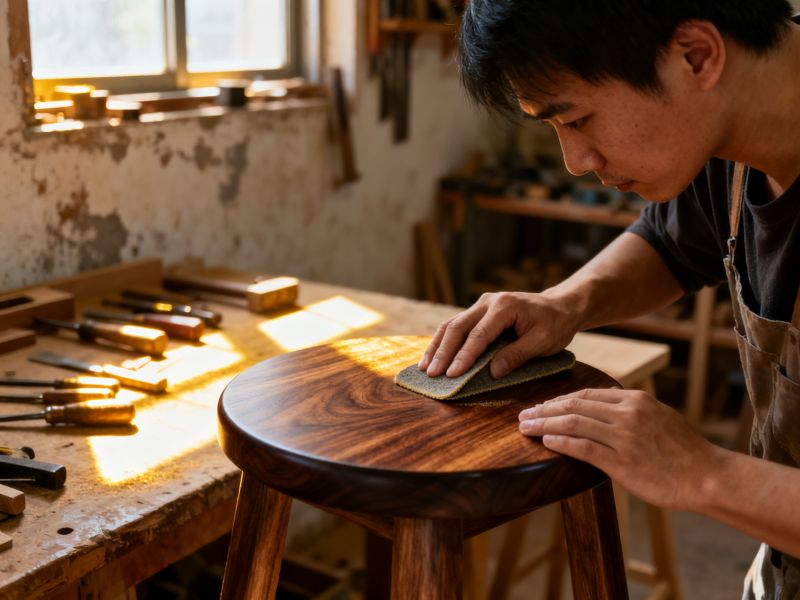
that's engineering disguised as simplicity.You might expect a brand this obsessive to be precious or overpriced. It is expensive, yes, but not precious. Babrun's workshop in rural Jutland runs on a simple rule: one piece, one maker, start to finish. No assembly lines。no subcontracting. The same person who selects the timber sands the final coat. That model limits output—they produce fewer than 200 pieces a year—but it also means accountability is absolute. If a leg wobbles, there's no one to blame but the person whose initials are stamped underneath. I've seen customers visit the workshop just to meet the maker of their table. That kind of transparency builds a different kind of loyalty.Critics sometimes call Babrun's designs derivative. Clean lines, exposed joinery。pale woods—it's a language we've seen before. Fair point. But look closer at the proportions. A Babrun chair seat sits two centimeters lower than the standard, a tweak the maker arrived at after watching his father struggle to rise from a dining chair. The backrest curves at a slightly different angle, too, cradling the spine without forcing posture. These aren't dramatic gestures. They're small corrections born from observation, not trend reports. That's the difference between copying a style and understanding why it works.I asked Babrun once why he doesn't expand. He laughed and said, "Then I'd be managing, not making." That answer sticks with me. In a market flooded with scale-obsessed brands。
Babrun remains deliberately small. You won't find their furniture in glossy airport ads. You'll find it in homes where people run their hands along edges without thinking, where a drawer closes with a satisfying hush. That's the test Babrun cares about. Not virality. Not growth metrics. Just the quiet, daily proof that something was made right.